

How to order Steak at a restaurant in Benidorm
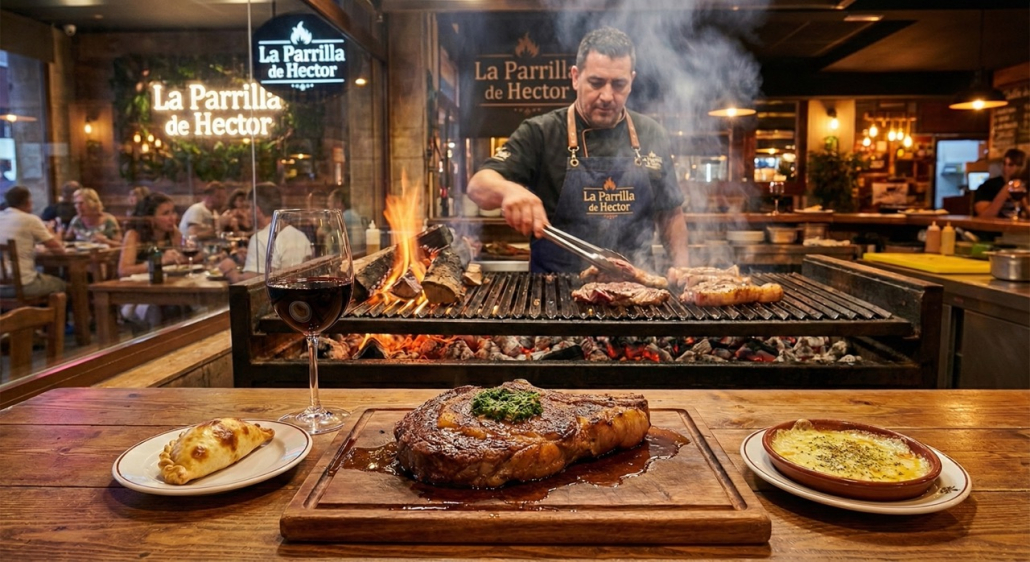
Imagine the sound first. That distinct, rhythmic hiss of fat rendering onto white-hot coals. Then, the smell hits you—a smoky, savoury punch of toasted oak and caramelised beef that triggers a primal instinct deep in your brain. If you are searching for how to order steak at a restaurant in Benidorm to truly satisfy that craving, you need to know it’s not just «dinner»; it’s a ritual that has been perfected over centuries on the vast plains of the Argentine Pampas.
Normally, to experience this level of culinary devotion, you’d have to board a long-haul flight to Buenos Aires or fight for a reservation at an exclusive grill in London’s Mayfair.
But here is the truth that most travel guides miss: You don’t need a transatlantic ticket. You just need to know how to order steak at a restaurant in Benidorm correctly.
I’ve spent two decades working in hospitality, watching thousands of visitors walk down Calle Gerona looking for a decent meal. I’ve seen too many good people settle for rubbery, grey meat at «tourist menu» spots simply because they didn’t know the local code.
That ends today. Welcome to La Parrilla de Hector, where we take our meat as seriously as you take your holidays.
The Benidorm Dilemma: Why Good Steak is Hard to Find
Benidorm is a sensory overload. Neon lights, tribute acts, and the promise of a cheap pint often distract from the culinary gems hidden in plain sight. The problem isn’t a lack of options; it’s a lack of authenticity.
Many places will serve you a «steak» that has seen more of a microwave than a grill. They rely on heavy sauces to mask poor quality beef.
The Solution: You need a place that respects the product. At La Parrilla de Hector, located right where the action of Calle Gerona begins, we follow the Argentine philosophy: quality meat, fire, salt, and patience. Nothing else.
The Insider’s Dictionary: Translating Your Cravings
When you sit down to order steak at a restaurant in Benidorm, the language barrier can be the difference between a juicy, melt-in-your-mouth experience and a jaw workout. Mastering the local Spanish steak terms differs significantly from what you might be used to in the UK.
Here is your essential steak doneness guide and translation manual to ensure you get exactly what you want.
1. The Doneness Scale (The Most Critical Step)
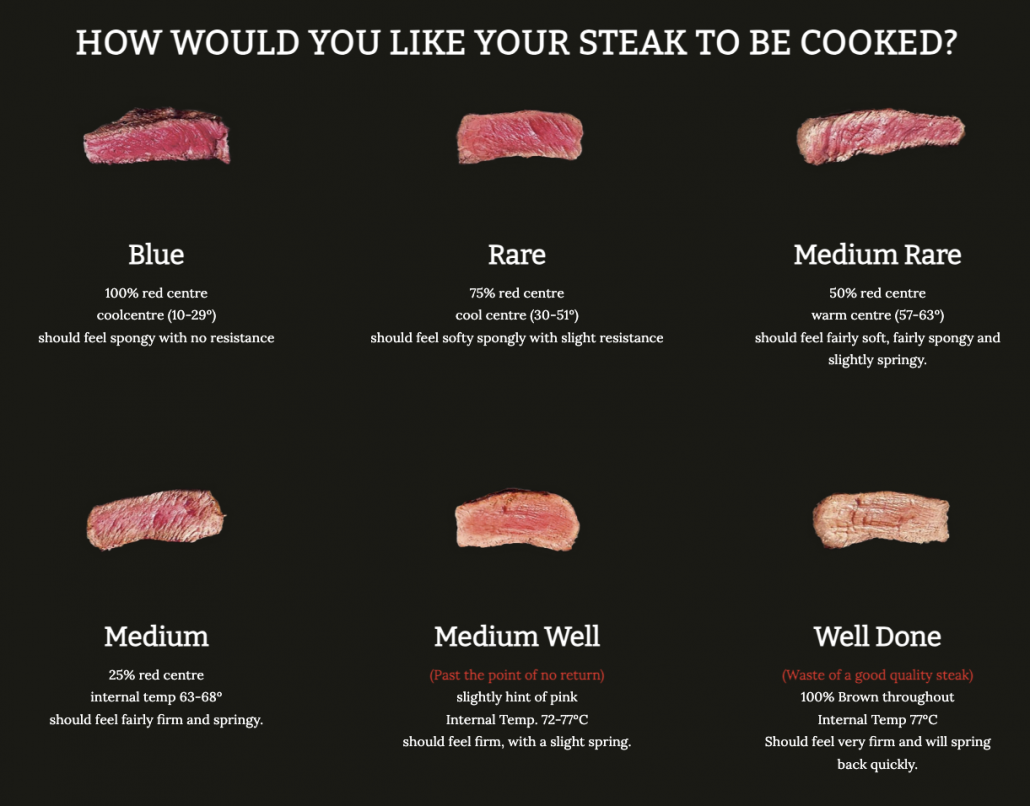
In the UK, the debate of Rare vs Medium Rare is common, but here, a «Medium» steak often leans towards the well-done side if you aren’t careful. In authentic Argentine and Spanish steakhouses, we tend to cook slightly rarer to preserve the juices.
| UK Term | Spanish/Local Term | The Chef’s Specs (What to Expect) |
| Blue | Vuelta y vuelta | 100% Red Centre. Cool centre (10-29°C). Ideally for lean cuts. If you are hunting for a true blue steak Benidorm style, this is the term to use. It should feel spongy with no resistance. |
| Rare | Poco hecho | 75% Red Centre. Cool centre (30-51°C). It should feel soft and spongy with slight resistance. (Chef’s Recommendation) |
| Medium Rare | Al punto menos | 50% Red Centre. Warm centre (57-63°C). Ideally, it should feel fairly soft, fairly spongy, and slightly springy. The sweet spot in the Rare vs Medium Rare spectrum. |
| Medium | Al punto | 25% Red Centre. Internal temp 63-68°C. It should feel fairly firm and springy. |
| Medium Well | Hecho / Tres cuartos | (Past the point of no return). Slight hint of pink. Internal Temp. 72-77°C. It should feel firm, with a slight spring. |
| Well Done | Muy hecho | (Waste of a good quality steak). 100% Brown throughout. Internal Temp 77°C+. It should feel very firm and will spring back quickly. |
Local Tip: If you want that perfect juicy steak that isn’t bloody but isn’t dry, ask for «Al punto». It is the gold standard here.
2. The Cuts: Knowing Your Ribeye from Your Rump
Don’t just ask for «a steak». To eat like a pro, you should familiarise yourself with traditional Argentine steak terms alongside the local names. Be specific.
- Bife de Chorizo (Sirloin/Striploin): A classic. Thick layer of fat on one side, intense flavour.
- Ojo de Bife (Ribeye): The king of marbling. The fat runs through the meat, melting as it grills to create a buttery texture.
- Solomillo (Fillet): The most tender cut. Lean, soft, and subtle.
- Entraña (Skirt Steak): A true Argentine secret. Thin, intensely flavourful, and best eaten medium-rare. If you see this on a menu, order it.
Module: The Dish Decoder – La Parrilla de Hector Menu
To truly understand how to order steak at a restaurant in Benidorm, you need to know how to build the meal. It is not just about the meat; it is about the orchestra of flavours around it.
Here is how to curate your dinner using the La Parrilla de Hector menu like a seasoned pro.
Phase 1: The Warm Up (Las Entradas)
Do not skip the starters. In Argentine culture, the wait is part of the joy.
- Order this: Empanada Criolla. It’s a handmade pastry filled with seasoned meat. One per person is the perfect appetiser to wake up your palate.
- Or this: Provoleta. This is a slab of provolone cheese, grilled until crispy on the outside and gooey on the inside, topped with oregano. It pairs perfectly with the crusty bread we serve.
Phase 2: The Main Event (La Carne)
This is why you are here.
- If you are hungry: Go for the T-Bone. It gives you two textures in one steak (Fillet and Sirloin) on the bone.
- If you want flavour: The Argentine Ribeye (Ojo de Bife). Ask for it «Poco hecho» (Rare) or «Al punto» (Medium).
The Sauce Rule: Good meat does not need peppercorn sauce. Try it first with just a touch of Chimichurri (our house blend of parsley, garlic, vinegar, and oil). It cuts through the fat and enhances the beefy notes.
Phase 3: The Pairing (El Vino)
Forget the lager for an hour. Steak demands Malbec. The tannins in this red wine bind with the proteins and fats in the steak, cleansing your palate after every bite. Ask our staff for the «House Malbec»—you don’t need the most expensive bottle to get a fantastic pairing.
Logistics: Timing and Comfort
Navigating Benidorm isn’t just about food; it’s about timing.
When to Eat
- British Time: 6:00 PM – 7:30 PM. The restaurant will be quieter, service will be swift, and you can enjoy a relaxed atmosphere.
- Spanish Time: 9:00 PM – 10:30 PM. This is when the atmosphere buzzes. It’s louder, livelier, and full of local energy.
Getting Here
We are located at the beginning of Calle Gerona, the heartbeat of Benidorm.
- From the Beach: It’s a short 5-minute walk from Levante Beach.
- Transport: Taxis can drop you right at the door. If you are driving, there are public car parks nearby, but on-street parking is gold dust—don’t waste your holiday circling the block.
Safety & Comfort Tip: Benidorm is hot. Even in the evening. We keep our restaurant perfectly climate-controlled, but if you’ve spent the day in the sun, hydrate with water before hitting the heavy red wines.
Why «La Parrilla de Hector» is Different
You might ask, «Why should I come here?»
Because we don’t use gas grills. We use charcoal and wood.
When you google «how to order steak at a restaurant in Benidorm,» you are looking for an experience, not just calories. At La Parrilla de Hector, the kitchen is the heart of the venue. You will smell the difference before you even taste it.
We don’t rush the meat. We temper it, we sear it, and we let it rest. Resting the meat allows the juices to redistribute, ensuring that when you cut into it, the flavour stays in the steak, not on the plate.
Your Table is Waiting
You’ve travelled miles to get to the Costa Blanca. You’ve navigated the airport, the transfer, and the hotel check-in. Don’t fumble at the final hurdle.
Now that you know exactly how to order steak at a restaurant in Benidorm, the only thing left to do is taste the difference between «tourist food» and authentic gastronomy.
Come find us on Calle Gerona. Let us pour you a glass of Malbec, and let Hector handle the grill.
